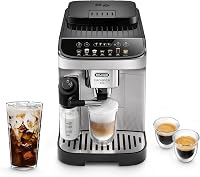
Super-Automatic Espresso Machines: The Complete Buyer Guide
Choose a super automatic espresso machine by your daily drinks and milk routine. The Magnifica Evo and Philips 3200 LatteGo automate milk preparation; the Magnifica Start and Philips 2200 suit buyers who prefer manual frothing.
On this page (10 sections)
- What is a super-automatic espresso machine?
- What should you compare before choosing one?
- Which milk system fits your routine?
- How much does the grinder matter?
- How much cleaning and maintenance should you expect?
- Four machines to compare by use
- What should you know about counter space and setup?
- How do you adjust the first drinks to your taste?
- Which common mistakes should you avoid?
- Which super-automatic espresso machine should you choose?
A super automatic espresso machine is a good fit if you want fresh-ground espresso without weighing, tamping and handling loose grounds for every cup. Choose its milk system first, then check whether its recipes cover the drinks you actually make.
For daily cappuccinos, automatic milk preparation can save a repeated step. For mostly black coffee with an occasional latte, a manual frother may suit your routine better.
The useful comparison is between complete drink routines: selecting a recipe, preparing milk, adjusting the cup and cleaning afterward. Extra recipes matter only when they replace something you would otherwise do yourself.
For a closer explanation of the brewing process, start with what a super-automatic espresso machine is.
What is a super-automatic espresso machine?
A super-automatic espresso machine combines a grinder and an espresso brewer that handle dosing and brewing after you select a drink. Milk preparation can be automatic or manual, depending on the model.
With a semi-automatic machine, you usually manage the ground coffee in a portafilter and make more decisions during preparation. A super-automatic moves much of that work inside the machine, trading direct control for fewer steps.
That trade suits someone who wants a familiar drink before work more than someone who enjoys changing every part of a shot. Our super-automatic vs semi-automatic comparison explains that choice in more detail.
“Bean-to-cup” is another common term for machines that grind beans for each drink. The names overlap, so judge a machine by its brewing steps and milk system rather than its category label.
Automatic preparation also doesn't mean unlimited output. If several people want drinks together, consider the work of making each cup in turn, refilling supplies and cleaning milk parts before everyone leaves.
What should you compare before choosing one?
Start with your usual drink, your milk routine and your willingness to clean. These choices narrow the field faster than a long list of technical features.
Write down what your household orders during a normal week. Separate everyday drinks from occasional treats so a rarely used recipe doesn't drive the whole decision.
| Your routine | Feature to prioritize | Buying implication |
|---|---|---|
| Mostly espresso | Strength and drink-volume controls | Extra milk recipes may add little value |
| Large black coffees | Coffee or Americano recipe | Check how the drink is made, not just its name |
| Daily cappuccinos or lattes | Automatic milk preparation | Compare cleanup as closely as drink selection |
| Occasional milk drinks | Manual frother | Accept a separate milk step |
| Several regular users | Easy controls and useful adjustments | Make sure everyone can repeat a preferred drink |
| Frequent iced coffee | A dedicated recipe, if desired | Check the recipe rather than assuming any cold drink mode |
| Limited counter room | Access around the machine | Measure filling and cleaning space as well as the base |
Which super-automatic espresso machine features matter most?
Recipe fit matters more than recipe count. A machine with your 3 daily choices can be more useful than one with a longer menu that misses your preferred drink.
An Americano and a longer coffee recipe aren't interchangeable. An Americano combines espresso with added water, while a longer extraction can produce a different flavor even at a similar final volume.
Controls matter when you share the machine. A clear way to adjust strength or cup volume can prevent one person's preferred drink from becoming everyone else's default.
Saved recipes can help a repeat user, but don't assume that saving a drink also means separate household profiles. Check the exact feature you need rather than treating all personalization options as equivalent.
For a model shortlist, see our best super-automatic espresso machines. Our guide to automatic espresso machines for home covers how those choices fit a household routine.
Which milk system fits your routine?
Choose automatic milk preparation for frequent milk drinks and a manual frother if you want to prepare the milk yourself. The best choice depends on how often you repeat the task and how you feel about cleanup.
An automatic system reduces your involvement during the drink. It still leaves you responsible for fresh milk, clean parts and any rinse cycle required after use.
A manual frother adds a separate step and requires attention while you work. That can be a sensible trade if most of your drinks are black and you only make a cappuccino occasionally.
Automatic milk suits repeated morning orders
Automatic milk preparation is most useful when it removes a task you would otherwise do several times a day. It can also help a household in which everyone wants milk drinks but few people want to learn frothing technique.
Look beyond the button press to the end of breakfast. Think about taking the milk container apart, washing it and returning unused milk to safe storage as directed.
Storage convenience and cleaning are separate benefits. A container that can go in the fridge still needs the cleaning routine required by its manual.
Our comparison of automatic espresso machines with milk frothers helps you focus on this part of the choice.
Manual frothing suits occasional milk drinks
Manual frothing makes sense if you enjoy controlling milk texture and don't mind standing at the machine. You can also prepare the coffee and milk as separate steps, adjusting their balance to suit your cup.
Start with cold milk in a suitable pitcher and follow the frother instructions. Leave space for expansion rather than filling the pitcher to the brim.
Plant-based drinks vary in how they foam, so expect to adjust your approach when you change brands or types. A machine's ability to froth an alternative doesn't mean every carton produces the same texture.
How much does the grinder matter?
The grinder matters because grind size affects how water moves through the coffee. Useful adjustment is more valuable than choosing a machine by grinder material alone.
A finer grind can slow the flow and change extraction; a coarser grind can let water pass more freely. The right setting depends on the beans, the drink and the limits of the machine.
Don't assume that the finest setting makes the strongest or best cup. An overly fine setting can restrict flow, while a large drink brewed through the same coffee may taste harsh rather than pleasantly strong.
Strength controls and grind controls do different jobs. Strength commonly changes the amount of coffee used, while grind changes the size of the particles.
Follow the manual when moving the grinder dial, including any instruction to adjust it only while the grinder runs. Make small changes and allow the machine to use coffee remaining from the previous setting before judging the result.
Choose a modest bag of beans at first so you can learn your preferences without filling the hopper with something you dislike. Our guide to coffee beans for super-automatic espresso machines explains bean choice in more detail.
How much cleaning and maintenance should you expect?
Expect small daily jobs plus periodic maintenance. Automatic rinses help with the machine's routine, but you still need to remove grounds, coffee oils, milk residue and mineral scale in the ways its manual requires.
Treat those as separate tasks. Descaling addresses mineral deposits in the water path; it doesn't wash a milk container or remove old coffee from a brewing area.
After drinks and at day's end
Clean milk components after use according to the manual, rather than waiting for visible buildup. For a manual frother, follow the required wiping and purging steps before residue dries.
Empty the drip tray and grounds container regularly. Rinse water can fill the tray even when you haven't spilled a drink, so cup count alone isn't a reliable guide.
If the machine tracks grounds-container use, follow its instructions when emptying and replacing that container. The sequence can matter for keeping its reminder in step with your routine.
Leave washed parts to dry as directed before putting them back. Avoid leaving damp grounds or milk residue inside a closed machine between periods of use.
Brew-group care and dishwasher limits
Only remove a brewing unit if the manual says it is removable, and follow the shutdown steps before doing so. Don't force parts that resist or rinse electrical sections.
Dishwasher-safe parts don't make the entire machine dishwasher safe. Check which containers, lids and small pieces qualify, along with any temperature or placement limits.
For the Philips routine, our guide to cleaning a Philips 3200 espresso machine is a useful next step.
Filters and descaling
Set water hardness during setup if your machine asks for it, then respond to its maintenance prompts. A filter can change the care schedule, but it doesn't remove the need to follow that schedule.
Philips says the AquaClean systems on the 2 Philips models below can allow up to 5,000 cups between descaling when filters are replaced as prompted. Treat that as a conditional maintenance claim, rather than a reason to ignore a descale alert.
Use the products and process approved for your machine. Our De'Longhi Magnifica descaling guide explains that task, while our guide to De'Longhi Magnifica water filters covers the filter decision.
Four machines to compare by use
Choose the Magnifica Evo or Philips 3200 LatteGo for automatic milk preparation, and the Magnifica Start or Philips 2200 for manual frothing. Within those pairs, the drink menu and cleaning design provide the clearest reasons to choose.
These examples cover different routines rather than a single winner for every kitchen. Match the machine to your everyday cup before deciding which extra feature deserves space on your counter.
De'Longhi Magnifica Evo: for varied drinks and automatic milk
The Magnifica Evo suits households with varied drink habits, especially those that want the machine to handle milk preparation. Its menu covers espresso, cappuccino, latte macchiato, iced coffee, coffee, hot water and My Latte.
The useful distinction is between variety and personalization. The menu gives you different drink types, while My Latte lets you personalize and save your own recipes.
Its Over Ice recipe adjusts the dose and brew for iced coffee. That makes it relevant if cold coffee is part of your regular routine, though the recipe name shouldn't be confused with a separate cold-brew process.
LatteCrema handles milk and milk alternatives, and its milk container can be stored in the fridge between uses. This suits someone who wants milk available for another drink without leaving the container on the counter.
Removable, dishwasher-safe parts give you options for cleaning. Check which pieces qualify and build milk care into your routine even when you plan to refrigerate the container.
Choose the Evo if you expect to use its mix of milk drinks, black coffee and iced coffee. Its broader menu has a clear purpose when several people want different orders.
Skip it if you mostly want espresso and enjoy preparing milk yourself. You would be choosing automatic milk features that don't solve your main daily task.
Philips 3200 LatteGo: for daily milk drinks and simple disassembly
The Philips 3200 LatteGo suits daily cappuccino drinkers who care about milk-system cleanup. Its 2-part system has no tubes or hidden parts and can be washed under the tap or in the dishwasher.
Its menu covers espresso, coffee, Americano, cappuccino and latte macchiato. That is a useful spread for someone who alternates between black coffee and familiar milk drinks.
The built-in ceramic grinder prepares beans for brewing, while the touch display gives access to the drink choices. Philips describes its Aroma Extract system as balancing brewing temperature and aroma extraction.
The removable brew group can be rinsed under the tap. That gives you access for a separate coffee-side cleaning job alongside washing the milk parts.
Choose the 3200 when its drinks cover your routine and easy milk-system disassembly is a deciding factor. It is a strong fit for someone who wants automatic milk but is reluctant to manage tubes.
Skip it if you want a dedicated iced-coffee recipe or prefer to froth milk by hand. Those needs point toward a different menu or milk setup rather than a different cleaning method.
For a shared kitchen, make sure everyone knows how to assemble the milk system after washing. A simple design still depends on putting its parts back correctly before the next drink.
De'Longhi Magnifica Start: for black coffee with occasional milk
The Magnifica Start suits black-coffee drinkers who want an occasional homemade latte. Its one-touch choices are espresso, coffee and Americano, with adjustable intensity.
Its conical burr grinder has 13 grind settings. This gives you room to adjust for your beans without choosing a broader recipe menu.
Milk drinks require the manual frother, which works with milk and milk alternatives. You prepare the coffee and milk separately, then combine them in the proportions you prefer.
That workflow suits someone who wants an Americano most mornings and a cappuccino on weekends. It also suits a buyer who likes learning milk preparation while leaving coffee dosing and brewing to the machine.
Removable, dishwasher-safe parts help with cleanup, subject to the manual's instructions for each piece. The frother still needs attention after milk use rather than waiting for a later general wash.
Choose the Start if its black-coffee menu matches your usual order and the milk step sounds welcome. Its appeal is a focused routine with some room to adjust coffee intensity and grind.
Skip it if several people expect automatic cappuccinos before work. Repeating manual milk preparation for each person changes the convenience of the whole breakfast routine.
Philips 2200 Series: for adjustable black coffee and manual milk
The Philips 2200 suits buyers who want to adjust a familiar black coffee and froth milk themselves. Its controls let you change drink strength and volume.
Its ceramic grinder handles whole beans, and its classic frother can steam or froth milk and plant-based alternatives. Milk preparation remains a separate task rather than an automatic cappuccino recipe.
That makes the 2200 useful when the household mainly wants espresso or coffee but still wants a way to prepare milk. Hot water is another option for drinks that don't need brewed coffee.
The removable brew group can be rinsed under the tap. Plan a place to wash and dry it so that this care step remains easy to complete.
Choose the 2200 if strength and volume adjustments are more useful to you than a longer drink menu. Its manual frother suits someone comfortable combining the finished coffee and milk.
Skip it if a named Americano preset is essential; the Magnifica Start includes that choice. Also skip it if your main goal is selecting a milk drink and letting the machine handle both parts.
Between the manual-frothing models, decide by the black coffee you want first. That choice will affect more cups than an occasional milk drink.
What should you know about counter space and setup?
Measure working space as well as the machine's base. You need room to add beans, fill water, remove waste containers and handle parts without moving a heavy appliance every morning.
Check depth with your intended cup in place, plus the position of the power outlet. Leave the ventilation clearance required by the manual rather than pressing the machine tightly against a wall.
Cabinet clearance matters even when the machine fits underneath. A lid that cannot open or a tank that cannot come out can turn a tidy position into an awkward daily task.
Prepare the machine before changing settings
Follow the first-use sequence in the manual, including washing approved removable parts and running the required rinse. Set water hardness and prepare or activate the filter if your model requires those steps.
Use fresh drinking water that meets the manufacturer's guidance. Don't assume distilled or heavily treated water is the right choice, since water composition can affect both brewing and maintenance.
Keep beans and ground coffee in their correct compartments. If you want occasional decaf through a ground-coffee bypass, confirm the exact model's instructions before using it.
Set up a workable coffee area
Keep a suitable cup, cleaning cloth and any milk pitcher close enough to use without crowding the machine. Leave a clear route to the sink for the drip tray and milk parts.
Allow time to learn the care prompts before serving a group. Your first setup is easier when you aren't trying to complete several different drink orders at once.
How do you adjust the first drinks to your taste?
Begin with a default espresso and change one setting at a time. A smaller, plain drink makes it easier to notice what the coffee tastes like before milk or extra water changes the balance.
Use the same beans and cup while you make early adjustments. Changing beans, strength, volume and grind together makes it hard to identify which change helped.
If the drink tastes weak
Reduce the drink volume or raise the coffee-strength setting before assuming you need the finest grind. Too much water for the amount of coffee can produce a thin cup even when the machine is working normally.
For a larger drink, consider an Americano or adding another brewed portion rather than stretching one small dose indefinitely. Choose the approach your machine supports and judge the finished cup.
If the drink tastes harsh or sour
Check the beans and recipe before making large grinder changes. A very dark roast, a long extraction or a drink size that doesn't suit the coffee can all affect the result.
If flow seems restricted, follow the manual's advice on grind and cleaning. Don't keep making the grind finer in an attempt to correct every flavor problem.
Sourness can have several causes, so make a small change and compare after the machine has had time to reflect it. Fresh beans and a consistent recipe give you a clearer starting point.
If a milk drink tastes too mild or cool
Adjust the coffee-to-milk balance before increasing every setting. A large amount of milk can hide coffee flavor even when the espresso itself tastes right.
Prewarm the cup with hot water if that suits your routine, then empty it before brewing. Expect the finished milk drink to differ from a near-boiling kettle drink, and use the machine's approved temperature controls where available.
Which common mistakes should you avoid?
Avoid buying for unused recipes, chasing every flavor issue with grind changes and delaying milk cleaning. These habits either add complexity or make a useful machine harder to live with.
Treating every coffee recipe as the same drink
A long coffee, an espresso and an Americano can use different brewing steps. Choose based on the flavor and volume you want rather than assuming a larger button produces a larger version of the same cup.
The same applies to iced drinks. Decide whether you want a dedicated recipe or are happy preparing coffee to combine with ice yourself.
Filling the hopper with unfamiliar beans
Try a small amount before committing a full hopper to a new coffee. Follow the machine's restrictions on oily, flavored or otherwise treated beans.
Keep the rest of the bag sealed and stored according to its guidance. The hopper is a convenient feed container, not a reason to expose all your beans at once.
Confusing automatic rinsing with complete care
A rinse doesn't replace washing milk parts, emptying waste containers or following brew-group instructions. Schedule those jobs around when you actually finish drinking coffee.
If you're leaving home for a while, follow the manual's storage steps. Don't leave used grounds and milk components waiting until you return.
Expecting automation to replace every choice
The machine handles preparation, but you still choose beans, cup size and drink balance. Expect a short learning period while you find settings that fit your taste.
If that adjustment sounds enjoyable but you also want control over dosing, tamping and shot preparation, reconsider a semi-automatic. If fewer daily steps are your priority, keep the super-automatic shortlist focused on useful recipes and manageable care.
Which super-automatic espresso machine should you choose?
Choose your super automatic espresso machine by the task you most want it to handle. Settle the milk decision first, then use your usual black-coffee order to separate the remaining options.
- Pick the Magnifica Evo for a household that will use varied drinks, automatic milk and a dedicated iced-coffee recipe.
- Pick the Philips 3200 LatteGo for regular milk drinks when a tube-free milk system is a priority.
- Pick the Magnifica Start for espresso, coffee or Americano with occasional manual milk preparation.
- Pick the Philips 2200 for adjustable espresso and coffee when you want to handle milk separately.
Before ordering, confirm that you can fill, empty and clean the machine in its planned counter position. A machine that fits your routine and workspace is more useful than extra choices you won't use.
If the remaining question is whether the daily convenience justifies the upkeep, read whether a super-automatic espresso machine is worth it. For a wider model shortlist, compare the best super-automatic espresso machines.
Frequently asked questions
What does a super-automatic espresso machine do?
A super-automatic espresso machine grinds beans, doses coffee and brews after you select a drink; some also prepare milk automatically, while others have a manual frother. You still fill the water tank, add beans, empty used grounds and clean the brewing and milk components according to the manual.
Are super-automatic espresso machines worth it?
A super-automatic espresso machine is worth considering if you make coffee often and want fewer preparation steps; choose one whose drink menu and milk system match your routine. Allow for beans, filters and cleaning supplies, and choose a semi-automatic machine instead if controlling each shot is part of the appeal.
Can a super-automatic espresso machine make regular coffee?
Many super-automatic espresso machines offer a coffee setting, but its result differs from drip coffee because the brewing method is different; an Americano adds water to espresso, while a coffee recipe may send more water through the grounds. Check which option matches the drink and cup size you prefer.
Do super-automatic espresso machines need cleaning?
Yes, super-automatic espresso machines need routine cleaning even when they run automatic rinses; empty the grounds container and drip tray, clean milk parts after use and follow the manual for brew-group care. Water filters and descaling address a separate part of maintenance, so neither replaces cleaning away coffee or milk residue.
Can you use pre-ground coffee in a super-automatic espresso machine?
You can use pre-ground coffee only if your exact machine has a suitable compartment and brewing mode; check its manual for the correct dose and steps, since a bypass chute usually works differently from the bean hopper. Never put ground coffee in the bean hopper or assume it can store several doses.