Super-Automatic vs Semi-Automatic Espresso Machines: Which Is Better? (October 2026)
The automatic vs semi automatic espresso machine choice comes down to daily effort: choose a super-automatic for push-button brewing or a semi-automatic for control over each shot. Check the milk system separately, since automatic coffee brewing doesn't always include automatic frothing.
On this page (10 sections)
- Automatic vs semi-automatic espresso machine: what changes?
- Which style takes less effort each morning?
- Which style gives you more control over taste?
- How does milk preparation change the choice?
- Which of these automatic machines fits your routine?
- What equipment and counter space should you plan for?
- How should you set up either machine?
- Which machine is easier to clean and maintain?
- What mistakes should you avoid when choosing?
- Which espresso machine should you choose?
Choose a super-automatic for fewer daily steps or a semi-automatic for direct control over each shot. The automatic vs semi automatic espresso machine decision should start with the routine you want to repeat every morning.
Milk changes that decision, too. Automatic coffee brewing can still leave you steaming milk by hand, so a latte drinker should check more than the brew button.
The 3 machines below are all super-automatics, with different approaches to milk and drink selection. They show the automatic side of the choice; the semi-automatic guidance explains when a manual coffee routine makes more sense.

Automatic vs semi-automatic espresso machine: what changes?
A super-automatic prepares the coffee internally, while a semi-automatic asks you to prepare a basket of grounds before brewing. The biggest difference is who handles the grind, dose and tamp.
With a super-automatic, you fill the bean hopper and water tank, choose a drink and let the machine work. Used grounds collect inside for you to empty later.
With a semi-automatic, you usually grind into a portafilter basket, spread the grounds evenly and tamp them before locking the portafilter into place. After brewing, you knock out the grounds and clean the basket.
The word “automatic” can also describe a portafilter machine that stops a shot at a programmed volume. Here, we're comparing bean-to-cup super-automatics with semi-automatics, rather than treating every machine with an automatic stop as the same category.
Our guide to super-automatic espresso machines covers the wider category. For the basic brew process, read what a super-automatic espresso machine is.
Which style takes less effort each morning?
A super-automatic reduces repeated preparation, especially when several people want coffee before leaving home. A semi-automatic suits a morning with room for grinding, preparing the basket and clearing up between shots.
Think through your busiest day rather than a quiet weekend. If you'll resent weighing coffee or clearing grounds before breakfast, extra manual control is unlikely to feel useful.
A shared household also benefits from simple drink choices. With a semi-automatic, each person needs to learn the preparation routine or rely on someone else to make the drinks.
Automatic brewing still needs attention. An empty tank, full grounds bin or milk-cleaning prompt can interrupt your morning, so refill and clear what you can before the next rush.
Automatic vs semi-automatic espresso machines for beginners
Choose automatic brewing if learning espresso isn't your goal. Choose a semi-automatic if working on grind, dose and shot yield is part of the reason you want the machine.
A beginner can learn either style, but the work differs. With a super-automatic, you mainly learn settings and care; with a semi-automatic, you also learn how your preparation changes the cup.
Our guide to choosing an automatic espresso machine for home covers household needs. For the all-in-one approach, see how to choose a bean-to-cup coffee machine.
Which style gives you more control over taste?
A semi-automatic gives you more direct control over the coffee dose, grind and amount of espresso in the cup. That flexibility helps when you want to refine a recipe for a particular bean.
Start by keeping the dose steady and weighing the espresso you brew. Change one thing at a time so you can connect a change in taste to a change in preparation.
For example, if a shot runs quickly and tastes thin or sharply sour, a finer grind may help. If it runs very slowly and tastes harsh, a coarser grind may help, though bean choice and recipe also matter.
A super-automatic gives you a smaller set of adjustments within its brewing system. Strength, volume and grind controls can still make useful changes without requiring you to prepare a basket.
Neither style guarantees your preferred flavor. Buy a semi-automatic for the chance to shape the result, and a super-automatic if its adjustment range fits how much effort you want to spend.
How does milk preparation change the choice?
Choose automatic milk texturing for fewer drink-making steps, or a manual frother if you want to handle the milk yourself. This choice is separate from whether the machine grinds and brews automatically.
For several morning lattes, an automatic milk system removes a repeated task. It still needs cleaning, so count both drink preparation and milk care when judging convenience.
A manual frother makes sense if most drinks are black and cappuccinos are occasional. You'll need to learn how much air to add and when to stop heating the milk.
Start with cold milk, leave space in the pitcher for expansion and clean the frother promptly after use. Follow the machine's instructions for purging and cleaning its particular frothing parts.
Milk alternatives can foam differently from dairy milk and from one another. Keep your milk choice steady while learning, then adjust your method rather than changing several things at once.
For more options built around milk preparation, see our guide to automatic espresso machines with milk frothers.
Which of these automatic machines fits your routine?
The Magnifica Evo suits frequent milk drinks, the Magnifica Start suits automatic black coffee with occasional manual frothing, and the Philips 2200 suits a short daily drink menu. None replaces the portafilter workflow of a semi-automatic.
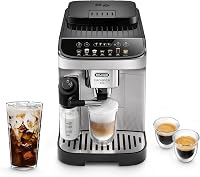
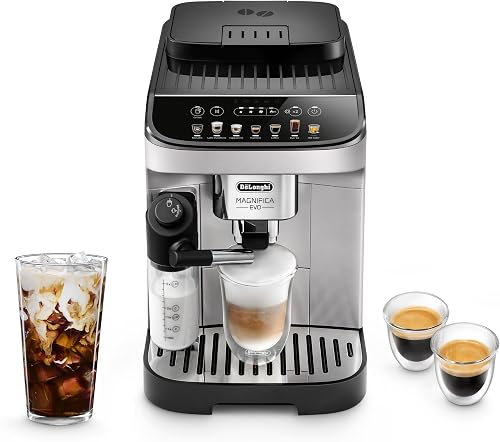
De'Longhi Magnifica Evo: for frequent milk drinks
Choose the Evo if you want the machine to handle both coffee brewing and milk texturing. Its LatteCrema system works with milk and milk alternatives, and the carafe can go in the fridge between uses.
Its 7 one-touch or customized recipes include cappuccino, latte macchiato and iced coffee. My Latte lets you save personalized recipes, which helps if your usual drink needs a different balance.
The Evo and Magnifica Start both have conical burr grinders with 13 settings. That gives you room to adjust the grind, but you won't prepare and tamp a separate coffee basket.
Skip the Evo if you mainly want to practice espresso technique, or if milk drinks are too rare to justify a milk-carafe routine. Refrigerator storage also doesn't replace cleaning the carafe and milk path.
De'Longhi Magnifica Start: for occasional milk drinks
Choose the Start if espresso, coffee and Americano cover your regular orders. Its 3 one-touch recipes and adjustable intensity keep daily coffee preparation focused.
The traditional manual frother lets you make milk drinks when you want them. This is a useful middle ground for someone who wants automatic coffee but enjoys preparing milk.
Skip the Start if you expect push-button cappuccinos. A manual frother leaves an active step in every milk drink, even though the coffee brewing happens inside the machine.
Philips 2200 Series: for a simple coffee menu
Choose the Philips 2200 if you want espresso or coffee with adjustable strength and volume. It automatically grinds, tamps and brews, and also dispenses hot water.
Its ceramic grinder handles bean preparation, while the classic frother leaves milk steaming to you. The removable brew group can be rinsed under the tap, giving you a clear part to include in your care routine.
Skip the Philips if automatic milk drinks are your main goal. It makes more sense for black-coffee drinkers who want an occasional latte than for a household expecting a full milk-drink menu at a button press.
What equipment and counter space should you plan for?
Plan for the whole coffee station, including access for refilling and cleaning. A machine that fits beneath a cabinet may still be awkward if you can't reach its hopper or remove its tank.
Measure depth as well as width, and leave working space in front. Check the manual's clearance needs before deciding where the machine will live.
A semi-automatic setup may need a separate espresso-capable grinder, plus a tamper, scale and milk pitcher. Some machines include some of those items, so check the complete setup rather than budgeting for the machine alone.
An integrated grinder saves a separate appliance footprint, but it ties grinding and brewing to one machine. A separate grinder gives you more freedom to change either part of a semi-automatic setup later.
Our guide to automatic espresso machines with built-in grinders helps if reducing separate equipment is a priority.
How should you set up either machine?
Start with the manual's water and first-use instructions, then establish one repeatable drink before changing settings. This makes early adjustments easier to understand.
- Check your water hardness. Enter the correct setting where supported, and follow the instructions for any filter you install.
- Complete the first-use rinse. Use the required containers and clearances, then fill the machine as directed.
- Start with a familiar bean. Avoid changing beans while you are learning what each control does.
- Keep one drink recipe steady. Use the same cup and volume while adjusting strength or grind.
- Change one setting at a time. Follow the manual for grinder adjustments, including whether the grinder must be running.
For a semi-automatic, add a consistent coffee dose and measured shot yield to that routine. Keep the basket clean and dry before adding grounds, and spread them evenly before tamping.
Don't jump straight to the finest grind setting on either style. Start with the recommended setting, taste the drink and make small changes within the machine's instructions.
Which machine is easier to clean and maintain?
Both styles need daily attention and periodic scale removal. A super-automatic moves more of the brewing work inside the machine; it doesn't remove the need to clear coffee residue.
Empty grounds and drip trays regularly, and follow the care schedule for the brew unit. Clean milk-contact parts promptly because dried milk is harder to remove.
The Evo and Start have auto-clean functions and removable dishwasher-safe parts. Check which parts can go in the dishwasher, since that doesn't mean the entire brew or milk assembly can.
Philips says the 2200's AquaClean system can allow up to 5,000 cups without descaling when filters are replaced as prompted. That conditional interval doesn't replace brew-group rinsing, milk care or other cleaning.
With a semi-automatic, clear the basket after brewing and clean the portafilter and milk wand. Follow the model's directions for deeper cleaning, since backflushing isn't suitable for every machine.
Before buying, read the care routine and check access to filters, cleaner and replacement parts. Include those ongoing supplies in your budget rather than judging the machine alone.
What mistakes should you avoid when choosing?
Avoid choosing by drink count, pump pressure or automatic labels alone. The more useful questions are which tasks remain manual and whether you want to repeat them.
- Confusing manual milk with semi-automatic brewing. A machine can automate grinding and brewing while leaving frothing to you.
- Expecting manual control to improve every cup. A semi-automatic rewards consistent preparation, so allow room for practice.
- Overlooking the grinder. For a semi-automatic, check that the grinder can make small adjustments suitable for espresso.
- Chasing a bad cup with several changes. Keep notes and change one setting at a time.
- Buying for rare drinks. Build your choice around what you make most mornings, then account for occasional extras.
- Ignoring the cleanup routine. Check what you must rinse after each milk drink and what needs attention later.
Also separate a weak coffee from a drink that's simply too large for your preferred strength. Adjust the recipe thoughtfully rather than assuming the finest grind or strongest setting will solve every taste problem.
Which espresso machine should you choose?
For the automatic vs semi automatic espresso machine decision, choose the routine you can happily repeat. Write down your usual drink, who makes it and which preparation steps you want to handle.
Pick the Magnifica Evo if frequent milk drinks and automatic texturing matter most. Pick the Magnifica Start if you want automatic coffee with a manual frother for occasional cappuccinos.
Choose the Philips 2200 Series if a short coffee menu and strength and volume adjustments cover your needs. Choose a semi-automatic instead if preparing the basket, measuring shots and refining your technique are part of the appeal.
Before ordering, check counter access and read the cleaning instructions for your chosen model. If automatic brewing fits your routine, use our complete super-automatic espresso machine buyer guide to narrow the remaining choices.
Frequently asked questions
What is the main difference between super-automatic and semi-automatic espresso machines?
A super-automatic handles grinding, dosing, tamping and brewing inside the machine; a semi-automatic leaves coffee preparation to you, usually with a portafilter that you fill and tamp before brewing. Milk preparation is a separate choice: either style may require manual frothing, depending on the model.
Is a super-automatic espresso machine easier to use?
A super-automatic is usually easier for daily brewing because it combines several preparation steps behind a drink button; you still need to refill beans and water, empty grounds and clean the machine. For easy lattes, choose an automatic milk system too, rather than assuming every automatic machine includes one.
Can a semi-automatic espresso machine make better espresso?
A semi-automatic gives you more ways to shape espresso, but better results depend on your grinder, recipe and skill; you can adjust the dose, grind and shot yield more directly. Choose it if that learning appeals to you, rather than expecting manual preparation alone to improve every cup.
Do super-automatic machines froth milk automatically?
Only some super-automatic machines froth milk automatically; the De'Longhi Magnifica Evo uses LatteCrema for automatic milk texturing, while the Magnifica Start and Philips 2200 Series have manual frothers. If you make several milk drinks each morning, this difference matters as much as automatic coffee brewing.
Which espresso machine is better for beginners?
A super-automatic suits beginners who mainly want a drink with fewer steps; a semi-automatic suits beginners who want to learn espresso preparation and accept some uneven early results. Decide whether your goal is a quick morning routine or a skill you want to practice before choosing the machine.