Is a Super-Automatic Espresso Machine Worth It?
A super-automatic espresso machine is worth it for daily espresso drinks with less manual work, especially if it replaces regular coffee-shop trips. Skip one if you rarely drink espresso, enjoy manual brewing, or won't keep up with cleaning.
On this page (8 sections)
- Is a super-automatic espresso machine worth it for daily coffee?
- What are you paying for besides convenience?
- Who benefits most from an automatic espresso machine?
- When is a super-automatic espresso machine not worth it?
- How should you choose before ordering?
- How do you get better coffee during setup?
- How much cleaning and upkeep should you expect?
- Which choice makes a super-automatic espresso machine worth it?
A super-automatic espresso machine is worth it if you make espresso drinks most days and want less preparation work. Its value falls if you rarely use it, prefer manual brewing, or won't keep up with cleaning.
The strongest reason to buy one is a routine you'll actually use: fresh beans go in, and the machine handles grinding, dosing, and brewing. Automatic milk systems can handle frothing too, but rinsing and care remain your job.
Is a super-automatic espresso machine worth it for daily coffee?
Yes, when frequent use makes the convenience worthwhile. Daily espresso, americanos, or cappuccinos give the machine a clear role in your kitchen.
Start with a week of your real coffee habits. Count the drinks you make at home, the ones you buy elsewhere, and which you would realistically replace.
A machine won't save you money on coffee-shop visits you still make. Include beans, milk, filters where used, cleaning supplies, and possible service costs when comparing ownership with your current routine.
For a broader overview, read our super-automatic espresso machine buyer guide. Our explanation of what a super-automatic espresso machine is covers which brewing steps it handles.
What are you paying for besides convenience?
You're paying for an integrated grinder and automatic brewing, plus milk preparation on equipped models. This reduces measuring, moving grounds between tools, and preparing each shot by hand.
The tradeoff is less direct control over the brew. You can adjust available settings, but the machine controls much of the process inside its brew unit.
If weighing doses and refining each shot sounds enjoyable, read our guide to super-automatic vs. semi-automatic espresso machines. Convenience has less value when it removes a part of coffee making you enjoy.
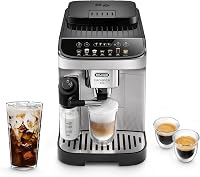
The De'Longhi Magnifica Evo suits daily espresso and milk-drink users who want a focused menu. It has 7 one-touch or customizable drinks, a conical burr grinder with 13 settings, and LatteCrema for milk or milk alternatives.
Its Over Ice recipe adjusts the dose and brew, while My Latte lets you personalize and save recipes. Removable, dishwasher-safe parts help with care, though you must follow the instructions for each component.
Choose it if your regular order is a cappuccino, latte macchiato, or espresso, with occasional iced coffee. Skip it if cold foam and a dedicated cold-brew option are central to your routine.
Who benefits most from an automatic espresso machine?
The best fit is a regular coffee drinker who values fewer steps over full control. A household with different drink preferences can benefit too, provided the menu matches those preferences.
One person using it daily can get more value than a large household using it occasionally. Count likely drinks, rather than assuming more users automatically justify a more complex machine.
Is a super-automatic espresso machine worth it for milk drinks?
Yes, if you make them often and accept cleaning the milk system after use. Automatic frothing saves preparation work, but milk-contact parts need prompt attention.
Compare how the parts detach, where you'll wash them, and how you'll store unused milk. Our guide to automatic espresso machines with milk frothers helps you compare this part of the routine.
The Philips 3200 LatteGo suits buyers who prioritize simple milk cleanup. Its milk system has 2 parts with no tubes or hidden parts, and Philips says it can be cleaned under the tap in as little as 15 seconds or in the dishwasher.
Its ceramic grinder and menu cover familiar black and milk coffees without a long list of recipes. The removable brew group also allows rinsing under the tap.
Choose it if cappuccinos and latte macchiatos cover your milk-drink needs. Skip it if you specifically want automatic cold foam or cold brew.
When does a wider drink menu earn its place?
A wider menu helps when people regularly want different types of coffee, including hot and cold drinks. It adds little if everyone chooses the same espresso each morning.
The De'Longhi Magnifica Duo offers 20 preset hot and iced recipes, with separate brewing technologies for espresso, drip coffee, and cold brew. LatteCrema Hot and Cool handles hot or cold foam with dairy milk or plant-based alternatives.
The Magnifica Duo suits mixed hot-and-cold coffee households. De'Longhi says its Cold Extraction Technology makes cold brew in under 3 minutes, which is useful if you want that drink without an overnight preparation routine.
Choose it when cold brew, iced lattes, and hot drinks all have a regular place in your week. Skip it if those extra recipes would remain unused and a narrower menu covers your needs.
When is a super-automatic espresso machine not worth it?
Skip one if espresso is an occasional treat or cleaning feels like a dealbreaker. Automation reduces drink preparation, not the need to manage coffee grounds, water, and milk residue.
A simpler brewer may be a better fit if you mainly want a large batch of black coffee. Likewise, limited counter space can make an integrated espresso machine awkward to refill and clean.
If you enjoy preparing each shot yourself, revisit our comparison of automatic and semi-automatic espresso machines. Choose the process you want to repeat every morning.
How should you choose before ordering?
Choose by usual drinks, usable space, and care requirements, in that order. A long feature list cannot fix a mismatch with your daily routine.
- Name your essential drinks. Separate drinks you'll make weekly from ones that merely sound appealing.
- Check access as well as footprint. Leave room to fill the hopper and tank, remove the grounds container, and detach milk parts.
- Read the cleaning routine. Check which parts need rinsing, washing, or periodic treatment.
- Check local service options. An integrated machine needs a workable repair route if a component fails.
Measure beneath cabinets and around nearby appliances before choosing a model. Our guide to choosing an automatic espresso machine for home explains how to match features to your kitchen and habits.
How do you get better coffee during setup?
Start with the manual's setup sequence and a simple baseline drink. Complete required rinses, set water hardness as instructed, and fit or activate a filter if you're using one.
Use a familiar bean so you can judge changes without switching coffee at the same time. Our guide to coffee beans for super-automatic espresso machines explains what to consider.
Adjust one setting at a time, such as strength or drink volume, and follow the machine's instructions for grinder changes. Some grinders must be running when you adjust them.
Avoid making a much longer espresso simply to fill a large mug. For an americano, adding hot water to espresso can give you the volume you want without pushing more water through the same grounds.
How much cleaning and upkeep should you expect?
Expect small routine tasks plus periodic deeper care. Empty grounds, wash the drip tray, clean milk-contact parts promptly, and follow the instructions for the brew unit.
Automatic rinse cycles don't wash every surface. A tray can also collect rinse water even when you haven't spilled coffee, so check it regularly.
Descaling removes mineral buildup and is separate from removing coffee oils or milk residue. Follow the machine's prompts and approved care products rather than using a homemade substitute.
Philips says AquaClean can allow up to 5,000 cups without descaling when filters are changed as prompted. That conditional benefit doesn't remove other cleaning tasks or mean one filter lasts that long.
Our guides to descaling a De'Longhi Magnifica and cleaning a Philips 3200 explain those routines. For longer-term planning, read about how long super-automatic espresso machines last.
Which choice makes a super-automatic espresso machine worth it?
A super-automatic espresso machine is worth it when you'll use its core drinks often and maintain it consistently. Choose around your ordinary morning, not the largest menu.
Pick the Magnifica Evo for regular espresso and familiar milk drinks. Choose the Magnifica Duo when hot coffee, cold brew, and cold foam all matter, or the Philips 3200 LatteGo when simple milk-system cleanup leads your priorities.
Keep your current brewer if you only want occasional espresso and it already meets your daily needs. Otherwise, use our best super-automatic espresso machine guide to compare models against your drink shortlist, available space, and cleaning routine.
Frequently asked questions
Is a super-automatic espresso machine worth it for one person?
Yes, if you make espresso or milk drinks most days and value a short preparation routine; household size matters less than regular use. For occasional coffee, the space and care may outweigh the convenience, especially if a simpler brewer already makes the drinks you enjoy.
Do super-automatic machines make real espresso?
Yes, super-automatic machines grind coffee and brew it under pressure to make espresso; they handle dosing and brewing internally, while a semi-automatic setup leaves more work to you. Beans, grind settings, drink volume, water, and cleaning still affect flavor, so presets don't remove the need for some adjustment.
Are super-automatic espresso machines hard to clean?
They need regular attention, though removable parts can make the work easier; expect to empty grounds, wash the drip tray, clean milk-contact parts, and follow brew-unit care instructions. Descaling is a separate task; automatic rinses help with the routine but don't replace every cleaning step.
Should I choose a super-automatic or semi-automatic espresso machine?
Choose a super-automatic for fewer preparation steps and a repeatable daily routine; choose a semi-automatic if you enjoy adjusting the dose, tamping, and working on shot preparation. A super-automatic still needs setup and cleaning, while a semi-automatic asks for more involvement with each drink.