How Long Do Super-Automatic Espresso Machines Last?
How long super-automatic espresso machines last depends on use, water quality, care, and repair access. There is no reliable number of years that applies to every model.
On this page (9 sections)
- How long do super-automatic espresso machines last?
- What affects how long a machine keeps working?
- Which parts may need attention over time?
- What setup and care routine supports long-term use?
- Which common mistakes should you avoid?
- Which machines suit buyers thinking about longevity?
- What should you check before buying for long-term use?
- When should you repair or replace an espresso machine?
- How long will a super-automatic espresso machine last for you?
Super-automatic espresso machines can work for years, but how long they last depends on use, water quality, care, and repair access. There is no reliable number of years that applies to every model.
For long-term value, buy a machine you can keep clean and get serviced. A larger drink menu or an automatic rinse cycle doesn't tell you which machine will stay useful longest.
How long do super-automatic espresso machines last?
A super-automatic espresso machine's useful life depends on its condition and whether repairs remain practical. Age alone is a poor reason to replace one that still brews properly.
Calendar years also hide differences in workload. A household making several drinks each morning puts more cycles through the grinder, brew mechanism, and water system than someone making an occasional espresso.
Separate lifespan from routine service: a worn seal or blocked milk component doesn't necessarily mean the machine is finished. Repeated major faults and unavailable parts are stronger reasons to consider replacement.
For help matching automation to your routine, see our complete super-automatic espresso machine guide.
What affects how long a machine keeps working?
Drink volume, water hardness, cleaning habits, and service access shape long-term ownership. Consider all 4 before choosing a machine for daily use.
How does daily use affect how long super-automatic espresso machines last?
More drinks mean more grinding, brewing, heating, and rinsing cycles. Count your household's likely drinks before buying, including extra cups when guests visit.
Check that the exact model suits that workload. Frequent use also fills the grounds bin and drip tray faster, so a routine that works for an occasional drinker may need adjusting.
Why do water and descaling matter?
Minerals can collect in the water path and interfere with flow and heating. Set water hardness during setup as the manual directs, and use the recommended descaling process when prompted.
A water filter and descaling do different jobs, so fitting a filter doesn't give you permission to ignore maintenance alerts. Our guide to whether a De'Longhi Magnifica water filter is needed explains that choice for the Magnifica family.
Does cleaning affect reliability?
Cleaning removes coffee oils, loose grounds, and milk residue before they collect in working parts. An automatic rinse helps with its intended task, but it doesn't replace every manual cleaning step.
Use our instructions for cleaning a De'Longhi Magnifica or cleaning a Philips 3200 espresso machine for model-specific guidance.
Which parts may need attention over time?
The brew mechanism, seals, grinder, milk system, and water path can need attention for different reasons. A change in performance is a clue to investigate, rather than proof that a particular part has failed.
Leaks may involve seals or water connections, while slow flow can have several causes, including buildup or unsuitable grind settings. Weak milk foam may call for cleaning and correct assembly before a repair.
Record when the problem happens: during startup, brewing, milk preparation, or shutdown. That detail helps support staff narrow down the issue without unnecessary part changes.
Stop using the machine if it leaks near electrical parts or shows another electrical fault. Leave internal repairs to a qualified technician, and check warranty terms before arranging service.
What setup and care routine supports long-term use?
Start with correct water settings and the manual's cleaning schedule. Good setup makes later maintenance prompts more useful.
Before the first drink, complete the required rinse and setup steps, set water hardness, and activate any filter as directed. Keep the model number, receipt, and manual together for future service.
Build care around tasks you can repeat:
- After milk drinks: run the required milk-cleaning cycle and wash detachable parts as instructed.
- During daily use: empty the drip tray and grounds bin before they overflow, and respond to prompts.
- At the stated intervals: clean the brew unit if it is user-removable, and follow any lubrication guidance.
- When prompted: replace filters and descale with products approved for the machine.
- Before extended storage: follow the manual's shutdown, cleaning, and draining instructions.
Don't put a brew unit or other removable part in the dishwasher unless the manual allows it. Let cleaned parts dry as directed before reassembly.
Our De'Longhi Magnifica descaling guide covers that model family; use the exact model's instructions for quantities and controls.
Which common mistakes should you avoid?
Ignoring prompts, using unsuitable beans, and forcing parts can create avoidable problems. Small shortcuts are especially easy to repeat during a busy morning.
Don't pour water into the bean hopper or whole beans into a ground-coffee chute. Use each opening only for its intended purpose, and follow the manual's limits for ground coffee.
Choose beans suited to the grinder, and check restrictions on flavored or heavily coated beans. Our guide to coffee beans for super-automatic espresso machines helps you make that choice.
Adjust grind settings only in the way the manufacturer allows. Change one setting at a time rather than repeatedly chasing a slow pour with large adjustments.
Never pull harder on a brew unit that won't release. Follow the shutdown and removal sequence, since the mechanism may need to return to its resting position first.
Which machines suit buyers thinking about longevity?
Choose by drinks, cleaning access, and care effort, then check service support for the exact model. These machines offer different conveniences, but their features don't guarantee a durability ranking.
De'Longhi Magnifica Evo: for familiar drinks and saved preferences
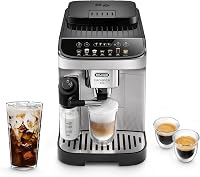
The Magnifica Evo suits households that want espresso and milk drinks without a large preset menu. It offers 7 one-touch or customized choices, including coffee, cappuccino, latte macchiato, and an Over Ice recipe.
Its conical burr grinder has 13 settings, while My Latte lets you personalize and save recipes. LatteCrema handles dairy milk and milk alternatives, with a milk container that can go in the fridge between uses.
Choose it if those drinks cover your week and you'll keep up with milk care. Skip it if automatic cold foam and a dedicated cold-brew option are central to your routine.
De'Longhi Magnifica Duo: for hot and cold drink households
The Magnifica Duo suits a household that regularly switches between hot espresso drinks, drip coffee, and cold drinks. Its 20 presets and LatteCrema Hot and Cool systems give those preferences a place on one machine.
De'Longhi says its Cold Extraction Technology makes cold brew in under 3 minutes. That feature matters most if cold brew is a regular choice rather than an occasional extra.
Choose it when several people will use the wider menu. Skip it if you mainly drink straight espresso, since extra recipes won't reduce the care required for the drinks you make.
Philips 3200 LatteGo: for straightforward milk cleanup
The Philips 3200 LatteGo suits buyers who want milk drinks with fewer milk components to wash. Its two-part system has no tubes or hidden parts, and it can be rinsed under a tap or cleaned in a dishwasher.
Its 5 coffee choices cover espresso, coffee, americano, cappuccino, and latte macchiato. A removable brew group gives you access for the rinse care described in the manual.
Philips says timely AquaClean filter changes can allow up to 5,000 cups before descaling; this is a maintenance claim, not a machine-lifespan figure. Skip this model if hot and cold milk foam options matter more than a simple milk-cleaning routine.
What should you check before buying for long-term use?
Check local service, replacement parts, and the full cleaning process before choosing a model. Being able to maintain and repair it matters more than a vague promise of long life.
Read the manual's care section and identify which tasks are automatic, which require removal of parts, and which need consumables. Include filters, descaler, cleaning products, and possible service shipping in your ownership budget.
Measure counter space and leave room to open lids, remove the tank, and reach service doors. A machine that fits under a cabinet may still be awkward to refill or clean there.
Our best super-automatic espresso machines guide helps compare features once you've narrowed down the upkeep you can manage.
When should you repair or replace an espresso machine?
Repair a clear, isolated fault when the rest of the machine still suits you. Consider replacement when faults recur, several systems need work, or parts and service are difficult to obtain.
Ask for an estimate covering diagnosis, labor, parts, and shipping, plus any service guarantee. Ask whether other worn components are likely to need attention soon.
A poor-tasting cup alone isn't enough reason to replace the machine. Check beans, settings, cleaning, and water first, following the troubleshooting steps for your model.
If your drink habits have changed, our guide to whether a super-automatic espresso machine is worth it can help you reassess the upkeep.
How long will a super-automatic espresso machine last for you?
How long your super-automatic espresso machine lasts will depend partly on the care and repairs you can sustain. Choose the Evo for familiar drinks and saved preferences, the Duo for regular hot and cold variety, or the Philips for its simple milk-system layout.
Before buying, read the care instructions and confirm a service route you can use. Start with our super-automatic espresso machine buying guide to match those requirements to your household.
Frequently asked questions
How long do super-automatic espresso machines last?
Super-automatic espresso machines can work for years, but no fixed lifespan applies to every model. Daily drink volume, water hardness, cleaning, and access to repairs all affect their useful life, so judge an older machine by its condition and service needs rather than its age alone.
What usually wears out first on an automatic espresso machine?
There is no single part that always wears out first. Seals, moving brew parts, grinders, and water-handling components face different kinds of wear, while dirty milk parts can cause problems without a major failure; a technician can help distinguish a worn component from a cleaning issue.
Can descaling make an espresso machine last longer?
Descaling removes mineral buildup that can restrict water flow and affect heating, so it is part of proper care. It cannot prevent every fault or restore worn parts, and the right timing depends on water hardness, filter use, and the instructions for your exact machine.
Is it worth repairing an old super-automatic espresso machine?
Repair is worth considering when the fault is clear, parts are available, and the machine still suits your daily drinks. Get an estimate that includes diagnosis, labor, parts, and shipping, then compare that total with a suitable replacement and any other work the machine needs.