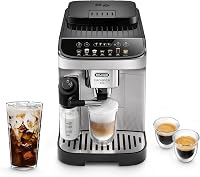
Philips 3300 LatteGo Espresso Machine Review: Worth It? (October 2026)
The Philips 3300 LatteGo suits people who want automatic milk drinks and an iced coffee preset without a long drink menu. Choose the 3200 for a dedicated americano option or the 4400 for more choices and saved profiles.
On this page (9 sections)
- Who should buy the Philips 3300 LatteGo?
- How does the 3300 compare with the 3200 and 4400?
- What should you check before putting the 3300 on your counter?
- How should you set up the Philips 3300 LatteGo?
- How do you get a better drink from its adjustable settings?
- Is LatteGo easy to clean after milk drinks?
- Does AquaClean remove the need for maintenance?
- What common mistakes should you avoid?
- Should you choose the Philips 3300 LatteGo?
The Philips 3300 LatteGo is a good choice for people who want automatic milk drinks and an iced coffee option alongside everyday espresso and coffee. It handles grinding, tamping and brewing, while you choose the drink and adjust it to your taste.
Its appeal is a manageable menu that covers several routines. Before buying, decide whether you will use that range or would be better served by the 3200's americano option or the 4400's saved profiles.
Who should buy the Philips 3300 LatteGo?
Buy the 3300 if you regularly switch between black coffee, iced coffee and milk drinks and want the machine to handle preparation. It suits someone who wants control over the finished cup without learning a separate grinder and manual espresso workflow.
Philips 3300 LatteGo

- 6 drink presets
- Adjustable strength, volume and milk level
- Three-part LatteGo system
Choose the 3300 if your week includes black coffee, iced coffee and automatic milk drinks. Its adjustable settings let you shape your usual drink without taking over grinding and tamping.
Pros
- Dedicated iced coffee preset
- Adjustable strength, volume and milk level
- Dishwasher-safe LatteGo parts
- Removable brew group
Cons
- No dedicated americano preset among its six choices
- Smaller preset menu than the 4400
The full-color display lets you select a drink and change strength, volume and milk level. Those controls matter most when a standard recipe gives you too much milk, too little coffee flavor or the wrong amount for your cup.
A household with one main coffee drinker is a clear fit. Someone who enjoys a cappuccino in the morning and iced coffee later can use the different recipes without needing a large menu.
Who should skip the Philips 3300 LatteGo?
Skip the 3300 if americano is your main drink and you want a named option for it. The 3200 deserves a closer look because its menu includes that recipe.
The 3300 also makes less sense if milk drinks are rare in your home. An automatic milk system earns its place through regular use, and each milk drink adds cleanup even when the parts are simple to wash.
Choose a different style of machine if you want to practice manual tamping or milk pouring. Our automatic vs semi-automatic espresso machine guide explains which tasks you take over with a more manual setup.
How does the 3300 compare with the 3200 and 4400?
Choose by drink recipes and shared use, rather than assuming a higher model number suits everyone. The 3200 favors a familiar hot-drink menu, the 3300 adds a dedicated iced choice, and the 4400 supports more variety and saved preferences.
| Detail | Philips 3300 LatteGo | Philips 3200 LatteGo | Philips 4400 LatteGo |
|---|---|---|---|
| Drink menu | Espresso, coffee, iced coffee, cappuccino, latte macchiato, hot water | Espresso, coffee, americano, cappuccino, latte macchiato; also offers hot water | 12 hot and iced presets |
| Main reason to choose | Mixed hot, iced and milk-drink routine | Dedicated americano option | Broader menu and up to 2 saved profiles |
| LatteGo parts | 3, without internal tubes | 2, without tubes | 3, without internal tubes |
| Milk-system cleaning | Rinse or dishwasher | Rinse or dishwasher | Rinse or dishwasher |
| Model | EP3341/50 | EP3241/54 | EP4444/90 |
Count the recipes you will actually make in a normal week. A longer menu adds little if you always select the same drink, while one missing favorite can matter every morning.
When the Philips 3200 is the better choice
The 3200 is the better match for regular americano drinkers who also want automatic cappuccino and latte macchiato. Its built-in ceramic grinder and touch display support a straightforward bean-to-cup routine.
Skip it if a dedicated iced coffee recipe is a key reason you are buying. You can make cold coffee drinks through other methods, but that is a different workflow from choosing a named iced preset.
For a wider comparison, see our Philips 2200 vs 3200 guide and De'Longhi Magnifica Evo vs Philips 3200 comparison.
When the Philips 4400 earns its place
The 4400 earns its place when two people want different favorite settings and will use its saved profiles. Returning to a preferred drink can be more useful than having several extra recipes you rarely select.
It also has QuickStart, which Philips says makes it ready to brew in 3 seconds. That is a readiness claim, not a promise that a finished drink reaches your cup in that time.
Skip the 4400 if one recipe covers almost every coffee you make. The 3300 already handles the core mixed-drink routine, so choose the larger menu for a clear need.
What should you check before putting the 3300 on your counter?
Check usable space and access for daily care, not just whether the machine fits under a cabinet. You need room for your cup, refilling and removing parts without turning every task into a rearrangement.
The glossy black EP3341/50 measures 9.68 in deep, 17.04 in wide and 14.6 in high. Leave working clearance beyond those measurements and check how you will reach the bean and water areas.
Its water capacity is 1.8 liters. Drink size, hot-water use and rinse cycles all affect refill frequency, so avoid treating tank capacity as a fixed number of coffees.
Put the machine on a stable, level surface near a suitable outlet. Keep its care instructions within reach during setup, especially for filter preparation and the first rinse.
How should you set up the Philips 3300 LatteGo?
Start with the manual's first-use sequence, then adjust one familiar drink at a time. Filter preparation, water settings and initial rinsing are separate from choosing your preferred coffee recipe.
Wash the removable parts as directed before use and fill the water tank with fresh water. Follow the instructions for preparing and activating AquaClean rather than simply dropping a filter into the tank.
Fill the bean hopper with whole beans suitable for an automatic espresso machine. Avoid flavored or coated beans unless the manual permits them; our guide to beans for super-automatic machines explains how to choose.
Choose one bean to begin with and keep it consistent while you adjust your drink. Switching beans and changing several settings together makes it harder to understand why the cup tastes different.
Use a cup with enough room for the full recipe, including milk and foam. A cup that fits beneath the outlet can still be too small for the selected serving.
How do you get a better drink from its adjustable settings?
Adjust coffee volume before chasing a stronger setting if your drink tastes thin. A large serving can spread the coffee flavor across more water, so a smaller portion is a useful first comparison.
Keep the same beans and recipe while changing one setting. Make a note of what you changed so you can return to a cup you liked instead of guessing next time.
Start with coffee, then adjust the milk
Set the coffee portion first, then add enough milk to reach the balance you want. Reducing milk can make coffee taste more present without changing every part of the recipe.
Use fresh, cold milk and follow the filling marks and assembly instructions. Different milk types can foam differently, so change only the milk if you want to compare that effect.
If you prefer a very large milky drink, remember that cup size affects balance. More milk produces a different drink, even when the coffee settings stay the same.
Treat iced coffee as a separate recipe
Adjust iced coffee with ice melt in mind. Ice adds water as it melts, so a hot-coffee setting you enjoy may taste weak once poured over ice.
Use a vessel suitable for the temperatures involved and follow Philips' iced-drink instructions. Keep your cup and ice amount consistent while finding a coffee volume you like.
The iced preset does not mean the machine makes ice or prepares cold brew. Plan for ice and enough cup space before starting the drink.
Set reasonable expectations for sound
Expect some sound from grinding and brewing. Philips says the 3300's SilentBrew technology reduces machine sounds by 40% compared with previous models, but the machine still performs those tasks.
Placement matters in an open kitchen or near a sleeping area. Avoid assuming that a quieter design makes an early coffee routine silent.
Is LatteGo easy to clean after milk drinks?
LatteGo keeps milk cleanup simple because there are no internal milk tubes or hidden compartments. Philips says the 3300's system can rinse clean in 10 seconds, and its removable milk parts are dishwasher safe.
That claim covers the milk system, rather than the whole machine. Allow time to separate the parts, clean them as directed and deal with the drip tray or coffee grounds when needed.
Clean milk residue promptly so it does not dry onto the parts. For dishwasher cleaning, follow the manual's placement and cycle guidance rather than assuming every removable machine part belongs in the dishwasher.
Our Philips LatteGo guide explains the milk system and its care. A short cleaning routine after the drink is easier to maintain than leaving several milk drinks' residue for later.
The brew group needs separate attention. Remove and clean it according to the 3300's instructions, and follow any directions for drying or lubrication.
Our guide to cleaning a Philips 3200 espresso machine covers related Philips care tasks. Use the 3300 manual for exact steps because the milk assemblies differ.
Does AquaClean remove the need for maintenance?
AquaClean can extend the interval between descaling, but filters do not replace regular cleaning. Philips says changing them when prompted can allow up to 5,000 cups without descaling.
Treat that figure as a maximum under the required filter routine. Follow the machine's guided descaling prompts instead of waiting until you think you have reached a particular cup count.
Scale and coffee residue need different care. A water filter does not remove old coffee oils from the brew group or wash milk from LatteGo.
Keep filters and the recommended care supplies available before a prompt interrupts your routine. Empty and clean the waste areas regularly, and follow the manual's directions for longer periods without use.
What common mistakes should you avoid?
Avoid buying by preset count or ignoring cleanup. The right machine fits the drinks you make and the care you are willing to repeat.
- Choosing a larger menu without a use for it: Write down your usual drinks before comparing models.
- Changing everything after one disappointing cup: Keep beans constant and adjust one drink setting at a time.
- Making every coffee as large as possible: Match volume to the flavor you want, then choose a suitable cup.
- Leaving milk parts for later: Clean them promptly after use, following the care instructions.
- Treating AquaClean as a complete care system: Keep up with brew-group, milk-system and waste-area cleaning.
- Assuming automation means no daily work: You still refill water and beans, empty grounds and wash parts.
If those daily tasks feel excessive, reconsider the machine category before choosing a model. Our super-automatic espresso machine buyer guide explains the routine alongside the convenience.
Should you choose the Philips 3300 LatteGo?
Choose the Philips 3300 LatteGo if you will regularly use its mix of black coffee, iced coffee and automatic milk drinks. Before ordering, confirm your counter access and decide where milk cleanup will fit into your day.
Pick the 3200 when a dedicated americano option matches your main drink. Pick the 4400 when two saved profiles solve a real shared-use need and its extra recipes will get used.
Once the menu fits, focus on making one repeatable cup you enjoy. Use the Philips LatteGo care guide to build the cleaning routine alongside your coffee routine.
Frequently asked questions
What drinks can the Philips 3300 LatteGo make?
The Philips 3300 LatteGo makes espresso, coffee, iced coffee, cappuccino, latte macchiato and hot water through six presets; you can adjust strength, volume and milk level to suit your cup. Americano is not a named preset, so regular americano drinkers should compare the 3200's menu before choosing.
How do you clean the Philips 3300 LatteGo milk system?
Separate and clean the LatteGo parts after preparing milk drinks, following the machine's instructions. Philips says the three-part system can rinse clean in 10 seconds and is dishwasher safe; that quick-clean claim covers the milk system; the brew group, drip tray and other areas still need their own care.
Does the Philips 3300 need descaling?
Yes, follow the Philips 3300's descaling prompts even when you use AquaClean. Philips says replacing the filter when prompted can allow up to 5,000 cups without descaling; that maximum depends on following the filter routine and does not replace regular cleaning of the milk system or brew group.
Is the Philips 3300 LatteGo better than the 4400?
The 3300 is the better fit when its drink menu covers your routine and you are happy adjusting settings as needed; the 4400 makes more sense for people who will use its broader menu and two saved profiles. Choose by your daily drinks and shared use, rather than model number.