De'Longhi Magnifica Evo vs Philips 3200: Which Is Better? (October 2026)
In the De'Longhi Magnifica Evo vs Philips 3200 comparison, choose the Evo for iced coffee and saved My Latte recipes. Choose the Philips 3200 LatteGo for simple milk cleanup when its core drink menu covers your needs.
On this page (11 sections)
- De'Longhi Magnifica Evo vs Philips 3200: which should you choose?
- How do their drink menus compare?
- Which milk system fits your routine?
- How do the grinders and drink controls differ?
- What should you do during the first setup?
- What do the water filters and care features offer?
- Which common mistakes should you avoid?
- Who should skip the Evo or Philips 3200?
- When does the Magnifica Start make more sense?
- Which machine is the better fit for your kitchen?
- Final choice: De'Longhi Magnifica Evo vs Philips 3200
Choose the De'Longhi Magnifica Evo for iced coffee and saved recipes, or the Philips 3200 LatteGo for simple milk cleanup. This De'Longhi Magnifica Evo vs Philips 3200 comparison comes down to the drinks you'll make and the care you'll do afterward.
Both grind beans and prepare coffee automatically, with automatic milk systems for milk drinks. Neither removes the need to refill water, empty coffee waste or clean milk-contact parts.
Start with your usual weekday order, then think about weekends and other people in your household. A feature earns its counter space when you'll use it often.

De'Longhi Magnifica Evo vs Philips 3200: which should you choose?
Pick the Evo if cold coffee and saved milk recipes are regular habits; pick the Philips if straightforward milk cleanup matters more. For someone who mostly drinks espresso or coffee, those differences deserve more attention than the total recipe count.
A shared household gets more value from extra drink options when people actually want different drinks. A solo coffee drinker may prefer a narrower menu that covers the same order every morning.
The Philips also has a dedicated Americano choice, which matters if that's your daily drink. The Evo's named menu includes hot water, but it doesn't name Americano as a one-touch recipe.
| Product | Best for | Drinks | Grinder | Milk system | Our score |
|---|---|---|---|---|---|
| De'Longhi Magnifica Evo | varied drink routines | 7 one-touch or customized recipes | 13 settings, conical burr | LatteCrema | 9.2 |
| Philips 3200 LatteGo | quick morning cleanup | 5 coffee varieties | Ceramic | LatteGo, 2 parts with no tubes | 8.8 |
Treat the comparison as a shortcut to a buying decision. A longer menu won't help if it adds drinks you rarely make, and easy milk cleanup offers little benefit if you never use milk.
How do their drink menus compare?
The Evo offers 7 one-touch or customized recipes, while the Philips offers 5 coffee varieties plus hot water. The useful difference is which drinks each menu includes.
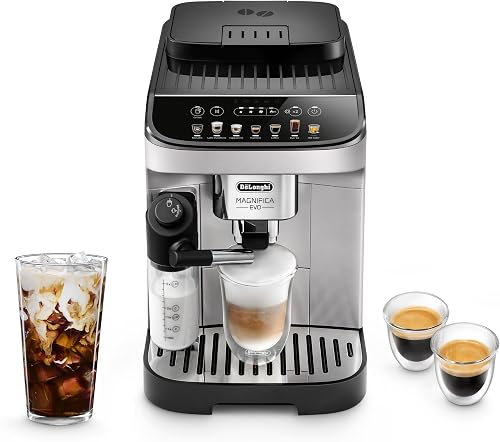
The Evo covers espresso, cappuccino, latte macchiato, iced coffee, coffee, hot water and My Latte. Its Over Ice recipe adjusts the dose and brew for cold coffee, while My Latte lets you personalize and save recipes.
The Philips covers espresso, coffee, Americano, cappuccino and latte macchiato. Hot water gives you another option for tea or other hot drinks.
Don't read the recipe totals as 7 separate coffee styles against 5 identical categories. The Evo's total includes hot water and a personalization option, so compare your actual orders rather than the numbers.
For iced drinks, remember that melting ice adds water. Start with the intended recipe and cup size before changing other settings to compensate for a weak drink.
For large milk drinks, more milk can hide the coffee's flavor. If your drink tastes too mild, consider its coffee-to-milk balance before assuming you need a different machine.
Which milk system fits your routine?
Choose LatteGo for easy disassembly or LatteCrema for fridge storage between uses. Your habits after brewing matter as much as pressing the drink button.
The Philips system has 2 parts with no tubes or hidden parts. Philips says it can be cleaned in as little as 15 seconds under the tap or in a dishwasher.
The Evo's LatteCrema system textures milk and milk alternatives, and its carafe can be stored in the fridge when not in use. That suits a routine where milk drinks happen at separate points through the day.
Fridge storage doesn't replace cleaning or extend the milk's own storage limits. Keep milk cold between uses and follow the machine's instructions for cleaning the carafe and milk path.
If you switch between dairy and plant-based drinks, plan to clean milk-contact parts between changes. Different milks can also produce different foam, so use fresh milk and change one thing at a time.
How does milk cleanup compare on the Magnifica Evo vs Philips 3200?
The Philips is the clearer fit if you want to take the milk system apart and rinse it immediately. The Evo suits someone who values storing the carafe between drinks and will still follow its cleaning routine.
Think through one full morning: brew, carry your cup away, then deal with the milk parts. Choose the routine you're willing to finish even when you're running late.
Our guide to what Philips LatteGo is and how to clean it explains the Philips system in more detail. For the full machine routine, see how to clean a Philips 3200 espresso machine.
How do the grinders and drink controls differ?
Both machines handle grinding internally, so choose by useful adjustments and drink controls, not grinder material alone. Neither ceramic construction nor a setting count gives you a reason to expect your preferred flavor without adjusting the coffee.
The Evo has a conical burr grinder with 13 grind settings. The Philips has a ceramic grinder and a touch display; Philips describes its Aroma Extract system as balancing brewing temperature and aroma extraction.
Begin with the recommended starting settings in the manual. Keep the beans and drink size steady while you learn what one adjustment changes.
If coffee tastes thin, first check whether you've selected too much water for the amount of coffee. Moving the grinder finer while leaving an oversized drink unchanged may not solve the problem you're tasting.
Make small grind changes only as the machine's instructions allow. Our De'Longhi Magnifica grind setting guide explains how to approach that process.
For either machine, fresh beans and a repeatable recipe make adjustments easier to judge. Our guide to coffee beans for super-automatic espresso machines helps you choose beans before changing settings.
What should you do during the first setup?
Set up water, beans and your usual cup before exploring the full menu. A careful first setup gives you a useful starting point for later adjustments.
Read the startup instructions, rinse the parts the manual identifies and complete the initial rinse or priming steps. Don't add coffee, milk or cleaning chemicals to a compartment unless the instructions call for them.
Check your water hardness using the method the manual specifies, then enter the correct setting where required. Guessing can leave the machine's care reminders out of step with your water.
Fit and activate a water filter according to the instructions rather than assuming insertion is the whole process. Keep a note of when it went in so replacement prompts don't catch you without a spare.
Start with one familiar drink in a cup you use daily. Adjust its volume first, then work on strength and grind in separate steps instead of changing everything after one cup.
For milk drinks, start with the amount the instructions recommend and keep the milk cold. Filling a container with far more milk than you need creates extra storage and cleanup work.
What do the water filters and care features offer?
A filter can help manage water care, but filter replacement, descaling and cleaning are separate jobs. Choose a machine whose whole routine you can keep up with.
Philips says AquaClean can allow up to 5,000 cups without descaling when you replace filters as prompted. Treat timely replacement as part of that system, and follow any descaling alert that appears.
The Philips also has a removable brew group that rinses under the tap. Follow the manual's schedule for removing it, rinsing it and completing any other required care.
The Evo has a water filter, an auto-clean function and removable dishwasher-safe parts. Only put parts in the dishwasher when the instructions identify them as suitable.
Milk cleaning removes residue, while descaling deals with mineral buildup in the water path. Running one process doesn't complete the other.
Keep the Philips 3200 cleaning guide handy for Philips care. If you choose De'Longhi, use our Magnifica cleaning guide.
Which common mistakes should you avoid?
Avoid changing several settings at once and putting off milk cleanup. Those habits make it harder to get a drink you like and maintain a workable daily routine.
Changing beans, grind, strength and drink volume together leaves you guessing about which change helped. Keep a short note of your preferred setup so you can return to it.
Don't assume a larger cup needs one much longer brew. Extra water changes the drink's balance; use a recipe that matches the style you want, especially when deciding between coffee and Americano.
Avoid leaving milk residue to dry while you finish other chores. Cleaning milk-contact parts promptly is easier than returning to dried residue later.
Empty and rinse waste areas as the manual directs, even when the machine still seems ready to brew. Automatic drink preparation doesn't mean the drip tray and used grounds take care of themselves.
Finally, don't buy either machine expecting automatic milk preparation to replace manual foam practice. If pouring patterns and controlling texture yourself are priorities, choose equipment around that goal.
Who should skip the Evo or Philips 3200?
Skip the Evo if its extra recipes won't get used, and skip the Philips if a dedicated iced recipe or saved My Latte option is essential. Your daily order should decide which compromise is acceptable.
The Evo is a weak fit for someone who wants a named one-touch Americano above all else. The Philips offers that choice directly, so there's little reason to work around a menu mismatch.
The Philips is a weaker fit for someone who already knows cold coffee will be a daily habit. The Evo's dedicated recipe addresses that use more directly.
Consider skipping both if you mostly want to learn manual espresso preparation or milk frothing. Our automatic vs semi-automatic espresso machine comparison explains the work each style puts in your hands.
Also reconsider either machine if you won't keep up with milk cleaning. A convenient drink button can't make that part of the routine optional.
When does the Magnifica Start make more sense?
Choose the Magnifica Start for automatic coffee with manual milk frothing. It's a useful alternative when you want to prepare milk yourself instead of choosing between these automatic milk systems.
The Start offers espresso, coffee and Americano at one touch, with adjustable intensity. Its conical burr grinder has 13 settings, and its manual frother works with milk and milk alternatives.
That makes it a closer fit for black coffee during the week and occasional milk drinks when you have time to froth. Skip it if pressing a button for a milk drink is your main reason for buying.
Read our Magnifica Evo vs Magnifica Start comparison if that tradeoff sounds useful.
Which machine is the better fit for your kitchen?
Choose the machine that fits your working space and cleaning route, as well as your drinks. Before ordering, measure the counter and leave room for filling, opening and removing parts.
The Evo measures 19.53 in deep, 12.09 in wide and 16.06 in high. The Philips measures 10 in deep, 17 in wide and 15 in high, so the shapes call for different counter layouts.
Don't measure only the empty rectangle on the counter. Check the space under cabinets, access to water and bean compartments, and where you'll set down removed parts.
A spot near the sink makes rinsing easier, while clear access to the fridge helps with milk storage. Leave a place for a cup during rinse cycles so the tray doesn't become your only catch point.
For more detail on the De'Longhi, read our Magnifica Evo review. If you're still choosing a machine style, start with our super-automatic espresso machine buyer guide.
Final choice: De'Longhi Magnifica Evo vs Philips 3200
For the De'Longhi Magnifica Evo vs Philips 3200 decision, use your weekly drink order as the final filter. Choose the Evo when its cold-coffee and saved-recipe options solve a regular need; choose the Philips when its menu covers your orders and quick milk cleanup fits your mornings.
If both cover what you drink, walk through the cleanup routine before deciding. The machine you'll willingly care for is the one that makes more sense for daily use.
If automatic milk preparation is the remaining question, read the Magnifica Evo vs Magnifica Start comparison before choosing.
Frequently asked questions
Is the De'Longhi Magnifica Evo better than the Philips 3200?
Choose the Magnifica Evo if you regularly want iced coffee or saved My Latte recipes; choose the Philips 3200 LatteGo if familiar coffee drinks cover your needs and easy milk cleanup matters more. Neither is the better choice for every household; start with your usual drink order.
Which machine is easier to clean?
The Philips 3200 LatteGo is the stronger choice for simple milk-system cleanup; Philips says its two-part system can be cleaned in as little as 15 seconds under the tap or in a dishwasher. The Evo has removable dishwasher-safe parts and an auto-clean function, but both machines need broader routine care.
Can the Magnifica Evo make iced coffee?
Yes, the Magnifica Evo has an Over Ice recipe that adjusts the coffee dose and brew for iced coffee; this makes it the closer match if cold coffee is a regular habit. For a less diluted drink, use fresh ice and avoid adding a large amount of warm milk.
Does the Philips 3200 need descaling?
Yes, follow the Philips 3200's descaling prompts and care instructions; Philips says AquaClean can allow up to 5,000 cups without descaling when filters are changed as prompted. That interval depends on filter care, and it doesn't remove the need to clean the milk system, brew group or drip tray.
Can either machine replace a manual espresso setup?
Either can replace the daily work of grinding beans separately and preparing an espresso puck, while also offering automatic milk preparation; choose this style for convenience and repeatable drink selection. If you want to control puck preparation and practice manual milk technique, a semi-automatic setup may suit you better.